
Do Lightning Rods Attract Lightning?
The Big Question About Lightning Rods: Do Lightning Rods Attract Lightning?
Perhaps you’ve heard the story of the woman who called into a radio morning show to complain about deer crossings in her area. She was upset that there were deer crossing signs in busy areas, and asked why those signs couldn’t be moved, so the deer would cross somewhere safer. If you’re like most of us, you probably laughed at that story and the ridiculousness of thinking that wild animals would cross somewhere because a sign told them to do so. However, we in the lightning rod industry get what feels like a similar question frequently: do lightning rods attract lightning?
Understanding Lightning Rod Functionality: How Lightning Rods Work
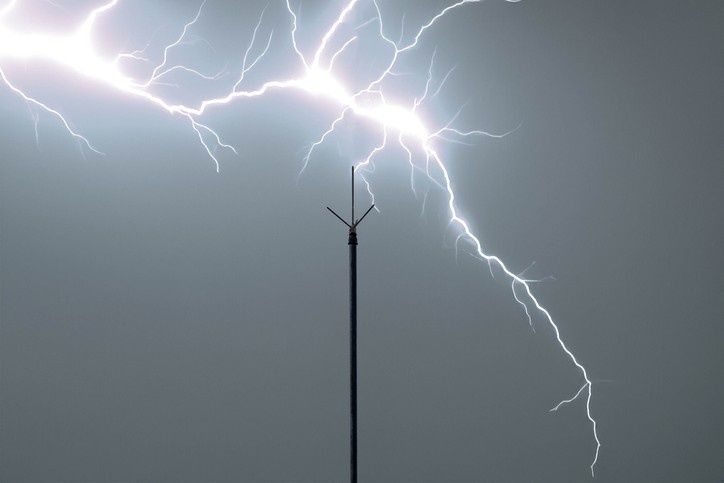
It’s easy to understand why people might be confused. Lightning rods are tall pieces of metal that stand on the highest parts of structures, so that lightning will strike them instead of the buildings they protect. They work by intercepting lightning and redirecting it along a safe pathway and into the ground. In this way, they provide a valuable service, safeguarding properties against lightning strikes.
Do Lightning Rods Really Attract Lightning Strikes?
Here is the thing to remember: The lightning that strikes a lightning rod was always going to strike in that vicinity. If it didn’t strike the lightning rod, it would likely have struck the building itself. So, while lightning rods attract lightning in the sense that they draw it to themselves instead of the building, they don’t attract the lightning strike itself. That was always going to happen, and the lightning rod simply took the impact for the building.
How Do Lightning Rods Protect Your Property? How Lighting Rods Work to Prevent Damage
Lightning happens when electrical charge builds up in the clouds and arcs down towards the earth. The amount of energy in a lightning strike is more than enough to allow it to push through just about any material, including metal, wood, stone, and skin. If lightning strikes a wooden building, it will pass through that building as it heads to the ground. However, that much electrical current generates quite a lot of heat, and can easily set a wooden structure on fire. If a copper conductor is attached to the building, that metal can safely carry the electrical current to the ground without sustaining damage. That’s how lightning rods work. They serve as part of a lightning protection system, designed to keep lightning away from your building and direct it to the ground, instead. A lightning protection system consists of the following components:
- Lightning Rods: These are designed to intercept lightning strikes and carry them to the grounding system.
- Grounding System: This system takes the current from the lightning rod and dissipates it into the ground.
- Surge Protection: Surge protection systems and devices protect electronics from voltage spikes that lightning causes.
- Bonding: This keeps electrical and structural components interconnected to prevent hazardous differences in voltage.
Key Considerations for Lightning Rod Installation
Before a lightning rod is installed, the property should be assessed and analyzed. A comprehensive site assessment, with measurements of the roof and foundation, is necessary to design the proper configuration of a lightning protection system. Additionally, the vulnerability of the site should be determined, along with structural considerations specific to each unique house. Lightning rods should always be professionally installed by experienced installers who are knowledgeable, certified, and well-qualified.
FAQs
- Does Lightning Ever Strike the Same Place Twice?
- Contrary to common mythology, lightning can absolutely strike the same place more than once. In fact, while homeowner’s insurance typically covers an initial lightning strike, most companies will not cover subsequent strikes. This would not be a stated policy if the likelihood of subsequent strikes wasn’t significant.
- Do Tall Trees Around a House Offer the Same Protection as a Lightning Rod?
- While lightning rods offer a controlled pathway for electrical current, trees can actually be dangerous in a lightning storm. Because they are poor conductors, trees can deflect electricity and cause side flashes. However, a lightning protection company can determine how to protect your trees and incorporate them into your lightning protection system.
- If a House is Grounded, Is a Lightning Rod Still Necessary?
- Even if your house is grounded, a lightning rod is still important. A lightning rod intercepts electrical current so that it can be carried by the grounding system into the earth. In this way, the two components work together to protect your home.
- Does My House Need a Lightning Rod If it’s Only One Story Tall?
- Yes, all structures can benefit from the protection of a lightning rod. Regardless of height, buildings are vulnerable to lightning strikes, especially in storm-prone areas.
For More on Lightning Rod Safety Benefits, Contact Boston Lightning Rod Company, Inc.
If you have questions about lightning rods, or wonder if you need one for your home or business, reach out to Boston Lightning Rod Company, Inc. for answers. For over 150 years, we have been providing full-service lightning protection to homes and businesses in the region, protecting the community and putting fears about lightning damage to rest. We’ve earned a reputation for excellence, and have become the trusted community partner for American-made lightning protection equipment. Across five generations, backed by extensive electrical knowledge, numerous certifications, and advanced training, Boston Lightning Rod Company, Inc. has provided tailored services to property owners in Dedham and the surrounding area, expertly installing innovative lightning surge protector systems. To learn more about all we have to offer, and how we can effectively protect your property from electrical surges, contact us for more information or to schedule a personalized installation appointment.
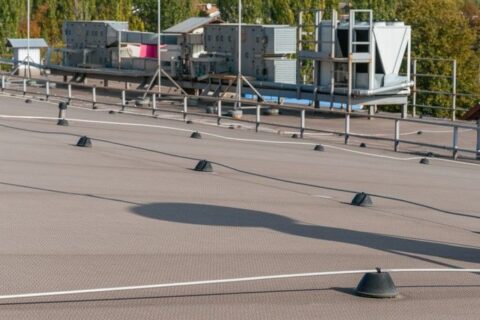
Designing Effective Industrial Lightning Protection for Industrial Facilities
Lightning protection is important for all structures, but particularly…
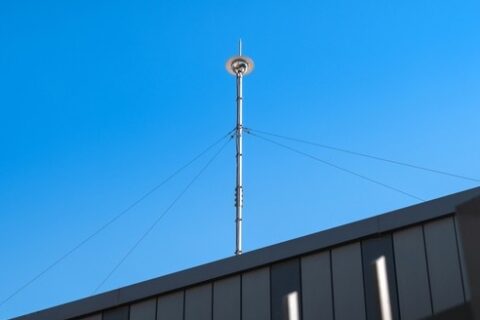
How to Protect Schools from Lightning
Lightning is a powerful natural phenomenon, capable of causing significant structural damage, damaging…