
Lightning Rods for New Roof
Lightning Rods for New Roof in Dedham, MA
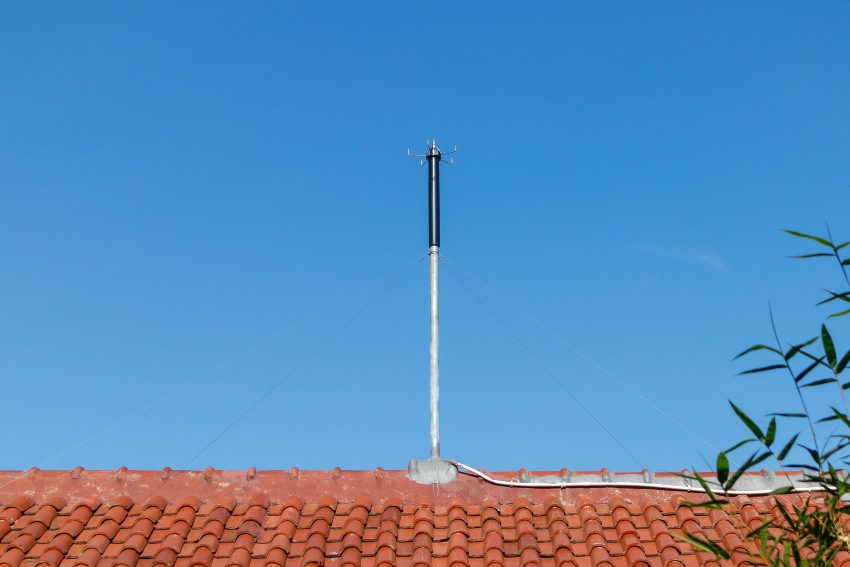
Integrating a lightning protection system during the construction of a new roof is the most efficient and cost-effective way to secure your property. Boston Lightning Rod Company, Inc. installs lightning rod systems for new roofs in in Dedham, MA. By coordinating installation with your roofing project, our technicians can seamlessly embed conductors and mounting hardware, ensuring the system is both aesthetically discreet and structurally integrated. This proactive approach prevents the need for future penetrations that could compromise your new roof’s warranty or water-tight integrity.
Types of Roofs Suitable for Lightning Rod Installation
Our systems are engineered to accommodate any architectural style or material. Whether you require a lightning rod for metal roof applications which requires specialized bimetallic connectors to prevent galvanic corrosion or traditional lightning rods on houses with asphalt shingles, slate, or tile, our hardware is designed for maximum durability. Flat commercial roofs utilizing TPO or EPDM membranes also benefit from our non-penetrating weighted bases, which maintain the roof’s seal while providing robust protection.
The Lightning Rod Installation Process
The process begins with a comprehensive site assessment to determine the most vulnerable points of your structure. Once the plan is finalized, we install air terminals at specific intervals along the ridgeline and high points. These are connected by main conductors that lead to down-leads, which safely direct the electrical surge away from the building’s interior.
Grounding and Surge Protection
A lightning protection system is only as effective as its path to the earth. We utilize advanced grounding techniques, including deep-driven copper-clad rods and electrolytic electrodes, to ensure low-resistance dissipation. Furthermore, true protection requires internal surge suppression. We install heavy-duty surge arrestors at your electrical service entrance to protect sensitive electronics and HVAC systems from the secondary surges that often accompany a strike.
Code Compliance and Safety Standards
We stand by changing safety standards and always have updated equipment. All our installations strictly adhere to the NFPA 780 (Standard for the Installation of Lightning Protection Systems) and UL 96A requirements. Compliance with these national safety standards is critical not only for the efficacy of the system but also for maintaining insurance eligibility and meeting local building codes.
Why Choose Us?
Since 1873, Boston Lightning Rod Company, Inc. has provided a professional and trustworthy approach to lightning safety. Our team is UL-listed and LPI-certified, ensuring that your investment is protected by experts who understand the physics of atmospheric discharge. We don’t just install hardware. We provide peace of mind through engineered reliability.
Secure Your Property Today
Don’t leave your new investment to chance. Whether you’re putting on a new roof or simply need protection, Boston Lightning Rod Company, Inc. is here for you. Contact our engineering team today for a consultation on your new roof project and ensure your facility is shielded from the unpredictable power of nature.
Frequently Asked Questions
Lightning rods do not “attract” lightning. When a storm creates a heightened electrical potential between the clouds and the ground, the lightning rod serves as a purposeful strike point. By utilizing highly conductive materials, the system intercepts the bolt and channels the massive electrical surge safely through engineered down-conductors and into the earth via grounding electrodes. This controlled redirection is essential for preventing the current from traveling through volatile building materials like wood, brick, or internal wiring.
In the industry, the term “ghost” lightning rod often refers to Charge Dissipation Terminals (CDT) or static-dissipation systems that are designed to be low-profile or virtually invisible to the naked eye. Unlike traditional pointed lightning rods that facilitate a controlled strike, these advanced systems utilize thousands of fine points to bleed off the static charge buildup from the surrounding air and structure. By neutralizing the potential difference between the ground and the storm clouds, these systems aim to prevent the formation of a “streamer,” effectively making the building appear invisible to the lightning strike’s path.
While many vintage rods were forged from high-quality copper and iron, their functionality today depends entirely on the integrity of the entire grounding system, which often degrades over decades. From a professional standpoint, we find that while the physical rod may still be capable of conducting a strike, the historical “glass ball” ornaments and weathered connections rarely meet current UL standards or NFPA 780 codes.